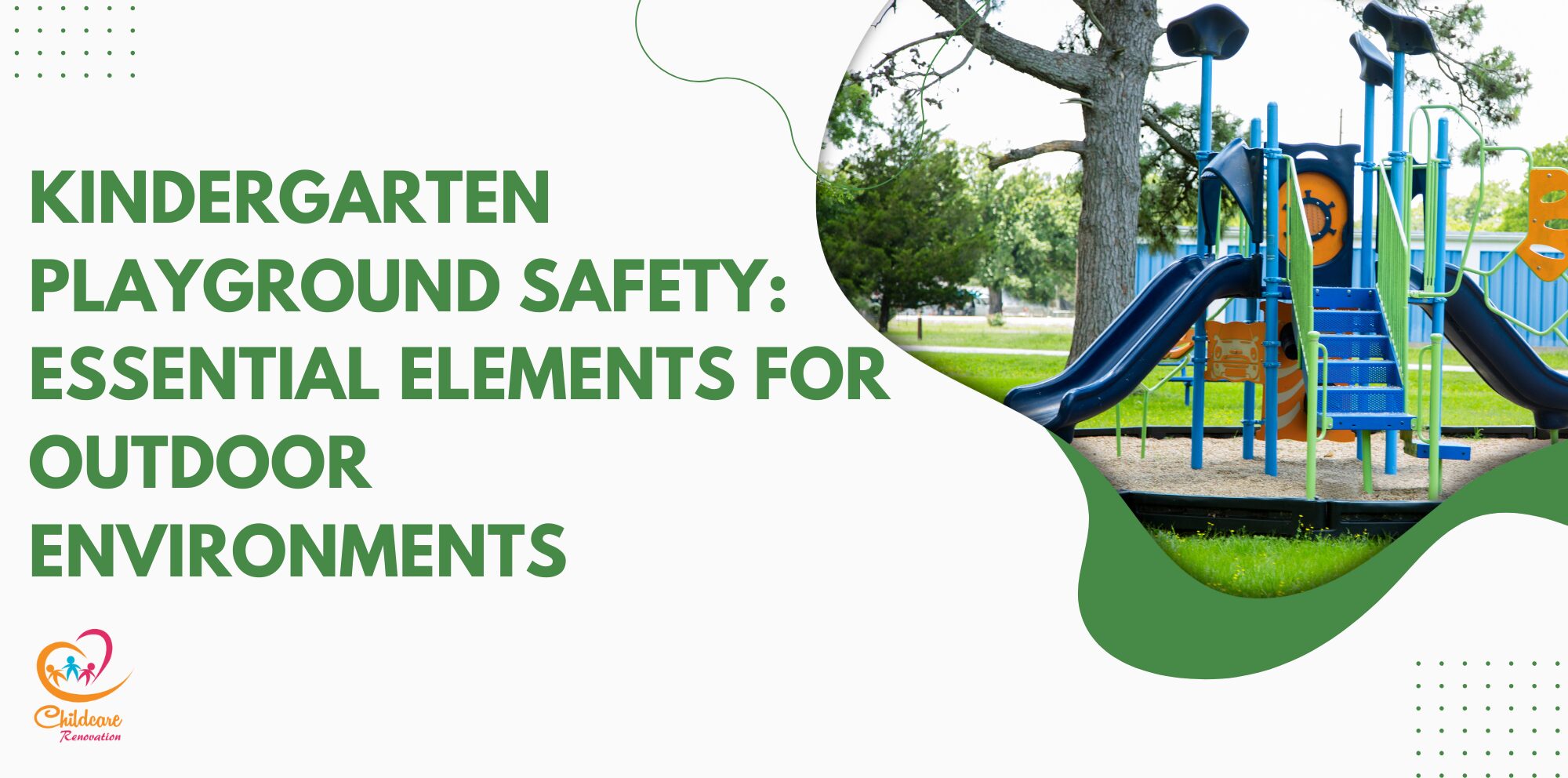
Kindergarten playground safety is important to ensure that all parties are safe and sound at all times. There are many ways kindergarten centres can ensure the safety of children within their playground area. Below are some ways to do so.
Kindergarten Playground Safety 1: Age Appropriate Equipment
The employment of equipment suitable for children’s ages is among the most critical aspects of kindergarten playground safety. Compared to older children, those between 3 and 6 have different physical abilities, coordination, and judgment; therefore, playground designs must meet their particular requirements.
Lower platforms, smaller slides, and little climbing structures will help to minimise the risk of significant fall injury by scaling equipment to a child’s dimensions. Materials should be free of sharp points or projecting screws that could cause cuts or bruises; all surfaces and components should have smooth, rounded edges. To promote balance and guard against unintentional slips or falls, handrails, barriers, and guardrails must be installed at kid-friendly levels.
Elements that move like swings or seesaws should be positioned far enough apart to avoid collisions and run slowly. Following correct spacing rules, openings in equipment must also be little enough to prevent a child’s head from getting stuck. Age-appropriate play environments also consider the child’s cognitive and social development, promoting creative play, problem-solving, and peer collaboration. Labels and signs specifying the appropriate age range for each playground help instructors as well as kids to safe areas.
Designed to match the developmental stage of kindergarteners, playgrounds allow children to boldly explore and play, hence developing motor skills and independence in a secure setting. Age-appropriate equipment ensures that fun and safety go hand in hand during outdoor playtime.
Kindergarten Playground Safety 2: Proper Spacing And Layout

Correct spacing and layout are essential elements of kindergarten playground safety as they immediately affect children’s interaction with each other and with equipment. By guaranteeing enough distance between buildings, a well-designed playground lowers the collision, congestion, and accident risk.
To ensure enough room for movement and safe landings, every piece of playground equipment should have at least six feet of clearance on all sides. Even more room is needed in places with swings or slides to provide for movement and fall zones. Furthermore, keeping active play zones such as climbing structures, running paths, or swings separate from quieter, passive areas including reading nooks, sandboxes, or natural zones helps avoid injuries and encourage a range of play.
@tadikailmukhalifah PEMASANGAN PLAYGROUND DAN MEJA UNTUK KEGUNAAN BERMAIN DAN BELAJAR MURID.👧👦 #kindergarten #kindergartenpenang #tadikajawi #tadikasgbakap #miniplayground #slidingkidzoona #playgroundkids
Children negotiate the surroundings more safely and intuitively when comparable activities are grouped together depending on intensity. Pathways should be broad enough for simple mobility and reachable for kids of all ability, including those using mobility devices. Designing with oversight in mind is also essential; the arrangement should allow teachers and caregivers to keep open lines of sight across the whole area. Avoiding unseen areas or blind spots behind major equipment helps to enable efficient monitoring and fast reaction should it be required.
Adult supervision is also motivated by strategic placement of seating and shaded rest areas, which also gives kids quiet places to go to when overloaded. A deliberately spaced and well-laid-out playground helps to create not only safety but also a balanced environment where all kids may freely and comfortably participate in outdoor discovery and play.
Kindergarten Playground Safety 3: Clear Visibility And Supervision
Essential elements of kindergarten playground safety are strong visibility and supervision. Young children are inherently inquisitive and sometimes unmindful of possible hazards, hence caregivers must be able to keep an eye on them always. Designed with monitoring in mind, an outdoor setting fosters positive interactions, helps to avoid mishaps, and enables immediate adult intervention when it is needed.
The design should reduce blind spots—places where kids might be concealed from view behind trees or construction. Strategic placement of playground equipment guarantees unobstructed sight lines from many perspectives, therefore enabling teachers and caregivers to simultaneously monitor all children. Visibility can be improved by open spaces between buildings, low-profile devices, and transparent materials such mesh panels or slatted walls.
Elevated or centrally located seating spaces for managers allow them to see the whole playground. Furthermore, well divided designated zones for various pastimes such as climbing, sand play, or peaceful reading should help to minimise crowding and enable concentrated supervision in each. Bright, contrasting hues on the playground also help adults quickly recognise youngsters and detect motion. Though not so high or opaque that it obstructs views, fencing ought to be safe.
Designing for great clarity helps to create a responsive and loving environment where youngsters feel safe and supervised but still able to explore, hence lowering risk. Effective and simple supervision enable caregivers to be proactive rather than simply reactive, hence transforming the playground into a place for safe exploration and happy learning.
Kindergarten Playground Safety 4: Proper Fencing And Gates

Correct fences and gates are crucial parts of guaranteeing kindergarten playground safety since they define a safe barrier that deters unauthorised people from entering and prevents kids from wandering off. Young children are naturally inquisitive and might try to escape the appointed play area if it is not well fenced, therefore presenting hazards like traffic, strangers, or hazardous terrain.
Ideally four feet tall, a sturdy fence defines the play area and offers a physical obstacle that allows for ongoing monitoring. The components employed ought to be robust and devoid of pointy corners or projections that could hurt someone. Common choices are chain-link fencing, but solid panel fencing can improve privacy and decrease outside distractions.
@aimieroutdoorplay Outdoor wooden playground for the kindergarten, its design for kids age from 3 to 7 years old. Kindergarten children benefit a lot while playing with such playground through sliding, climbing, balancing. #Kindergartenslide #Woodenplayground #Naturalplayground #Spiralslide #playground
Self-closing, self-latching systems are advised; latches should be positioned beyond reach of children to stop them from opening the gate by themselves; child safety must guide gate design. Furthermore, gates should be placed thoughtfully to enable quick access in crises without sacrificing security. Gates should also aid ADA compliance where required, clearly labeled and wide enough for strollers or emergency responders. Good fencing and gate mechanisms provide children, teachers, and parents psychological security in addition to improving physical safety.
Regular checks are absolutely necessary to guarantee gates and fences stay whole and useful over time. In essence, a well-fenced playground for young children is a fundamental element of a safe, orderly, and caring outdoor learning environment.
Kindergarten Playground Safety 5: Inclusive And Accessible Design
Inclusive and accessible design is absolutely critical for kindergarten playground safety since it guarantees that all children—whatever physical ability, developmental stage, or sensory needs can take part in outdoor activities.
Beyond simple adherence, a truly inclusive playground creates a friendly atmosphere in which every youngster feels welcomed. Integrating wheelchair-accessible pathways, ramps, and transfer platforms enables mobility-challenged children to reach elevated play structures and interact with their peers, hence one of the main characteristics is this. Children with sensory processing issues or developmental delays are stimulated by sensory-rich elements including tactile panels, musical instruments, and textured surfaces.
Equipment ought to be created with universal access in mind — wide apertures, low-transfer heights, and ground-level play characteristics accessible for everyone. For wheelchairs, walkers, and all kinds of mobility, safety surfacing such poured-in-place rubber provides a stable and padded surface. Children with visual or hearing impairments benefit from enhanced navigation thanks in part to visual and auditory cues like vividly coloured signage and sound-based play. Including quiet areas or comfortable nooks where youngsters who might be overstimulated can retire and self-regulate is also crucial.
Teachers and designers encourage empathy, inclusivity, and social development among children by creating playgrounds that fit a range of talents and tastes. Accessible playgrounds finally satisfy safety standards as well as provide an enriching, just play environment that upholds every child’s entitlement to savour outdoor exploration and development.

Speak with The Experts
Planning to get started at your kindergarten but have no idea about it?
Childcare Center Renovation Singapore is a reliable company for renovation and interior design. They have about ten years of experience in this field and have a good reputation among customers.
Call us now to get your desired kindergarten design ideas now!