
An optimal layout within a childcare centre is an important aspect to ensure that the centre is efficient. There are many important reasons to have an optimal layout within a childcare centre. Continue reading to find out.
Optimal Layout 1: Clear Sightlines Enhance Supervision
Direct line of sight is one of the most important features of a perfect arrangement in daycare facilities, supervision directly helps to ensure both safety and developmental assistance. Open, unobstructed views allow caregivers to readily keep an eye on every child’s activities and interactions without having to travel from one location to another.
Along with helping to avoid accidents like falls, toy abuse, or rough play, this degree of visibility lets personnel quickly spot and intervene in the event of behavioural problems or emergencies. Moreover, continuous eye contact helps small children, who flourish when they know an adult is close by and focused, feel safe. Children may freely learn more, play, and explore thanks to this sense of security that also promotes emotional stability.
Clear sightlines also promote independence while still keeping boundaries; children can confidently participate in many different learning areas knowing help is nearby should they need it. For caregivers, it encourages more effective monitoring, hence lowering stress and allowing more significant interactions with children. An open floor plan guarantees nothing goes unnoticed whether it is during serene reading time, chaotic play, or transfers between events.
Some sensible methods to keep clean sightlines are strategic low shelves, large windows between rooms, and eschewing of high walls separating activity zones. All in all, a design that gives visibility priority not only keeps children safe but also fosters a loving atmosphere where they may grow social, emotionally, and intellectually under the careful yet unobtrusive watch of their parents.
Optimal Layout 2: Defined Zones Promote Development
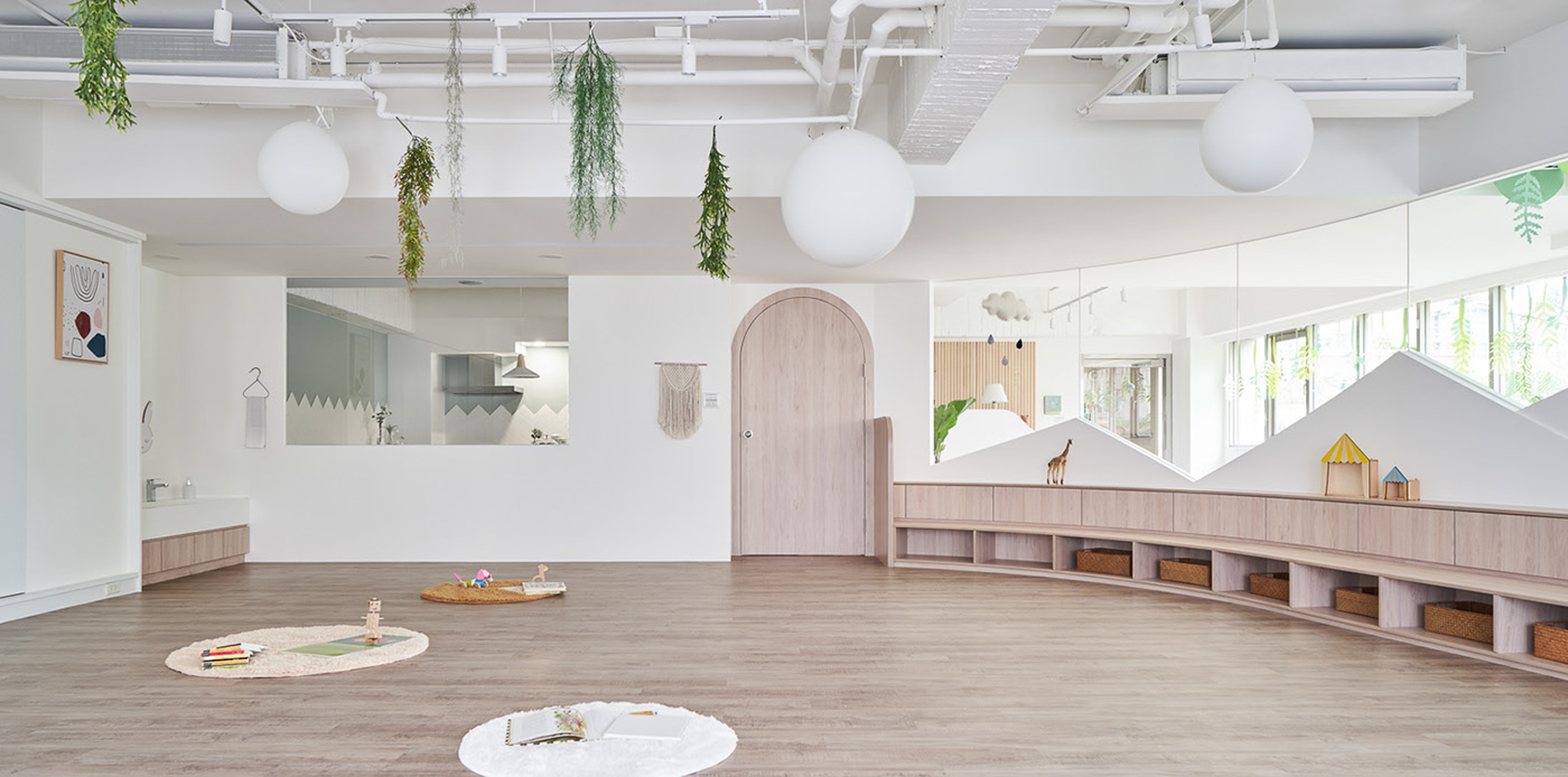
Promoting children’s development depends critically on a well-designed childcare centre plan integrating distinct zones. These chosen regions — reading nooks, inventive zones, physical play spaces, quiet relaxation areas, and sensory stations are carefully constructed to foster particular components of early learning.
Knowing each region’s purpose enables kids to create habits and promotes their involvement in deliberate activities. A reading area with age-appropriate books and cozy chairs, for instance, fosters early literacy and a love of stories; a building or block area helps to build spatial awareness, problem-solving abilities, and teamwork. Encouragement of movement through physical play areas helps kids acquire gross motor skills, coordination, and physical confidence.
@alhawarydesign Interior Design – Daycare Garut, ©2023 Design & Visual by : Alhawary Design Studio Architecture Planning | Design & Visual Contact us : 089638034242 Instagram : @alhawarydesign Email : alhawarydesign@gmail.com More info : https://linki.ee/alhawarydesign Atau klik Link d bio.. . #alhawarydesign #jasadesainarsitektur #desainrumah #rumahminimalismodern #arsitektur #desainrumah #rumahmodern #jasaarsitek #desainarsitektur #arsitekgarut #arsitekbandung #arsitektasik #arsitekturgarut #jasaarsitekrumah #interior #interiorgarut #interiorjakarta #interiorbandung #interiortasik
Children may withdraw and recharge in quiet spaces for self-regulation or resting, hence helping emotional well-being. Educators can also more efficiently control transitions and minimise chaotic behaviour by arranging the surroundings into clearly marked regions, therefore improving learning results and safety. As kids learn to explore the area on their own and pick activities that interest them, these zones promote autonomy.
Moreover, age-appropriate resources kept in every section promote autonomy and curiosity, which are essential for early childhood development. Deliberate separation of active and quiet areas also reduces overstimulation and distractions, therefore allowing children to focus and more deeply take part in their favourite activities. While defined areas offer opportunities for significant interaction that supports growth in mental, physical, social, and emotional spheres, they also help to make the learning environment more consistent and orderly.
Optimal Layout 3: Smooth Traffic Flow Reduces Accidents
A smooth traffic pattern inside a childcare centre is a must component of a best design as it helps both development and safety. Children can move around without obstacle when the design enables clear, broad routes between activity areas, so lowering the risk of collisions, trips, and falls especially at high-traffic periods like drop-off, pick-up, or transitions between play and learning zones.
Broad paths and clearly marked routes help young children who flourish on habit and order create a more peaceful and predictable environment by avoiding overcrowding and confusion. This sense of order improves emotional security as well as physical safety as youngsters feel more confident moving around the area alone.
Furthermore, a well designed building with designated entry and exit points lets personnel manage flow during emergency evacuations, hence ensuring that children may be fast and safely guided out of the building. It also enables carers to monitor changes more thoroughly, thereby guaranteeing that no child is neglected or left behind. Beyond safety, this smooth transition between rooms promotes autonomy and inspires kids to assume responsibility for their own changes.
Decreasing distractions and interruptions also enables learning activities to proceed smoothly. Minimising congestion and developing a sense of spatial awareness, smooth traffic flow enables the construction of a more harmonic, orderly environment where youngsters can explore, learn, and grow confidently. It essentially transforms the physical surroundings into a safe, supportive backdrop for excellent early childhood activities.
Optimal Layout 4: Age-Appropriate Furnishings Ensure Physical Safety
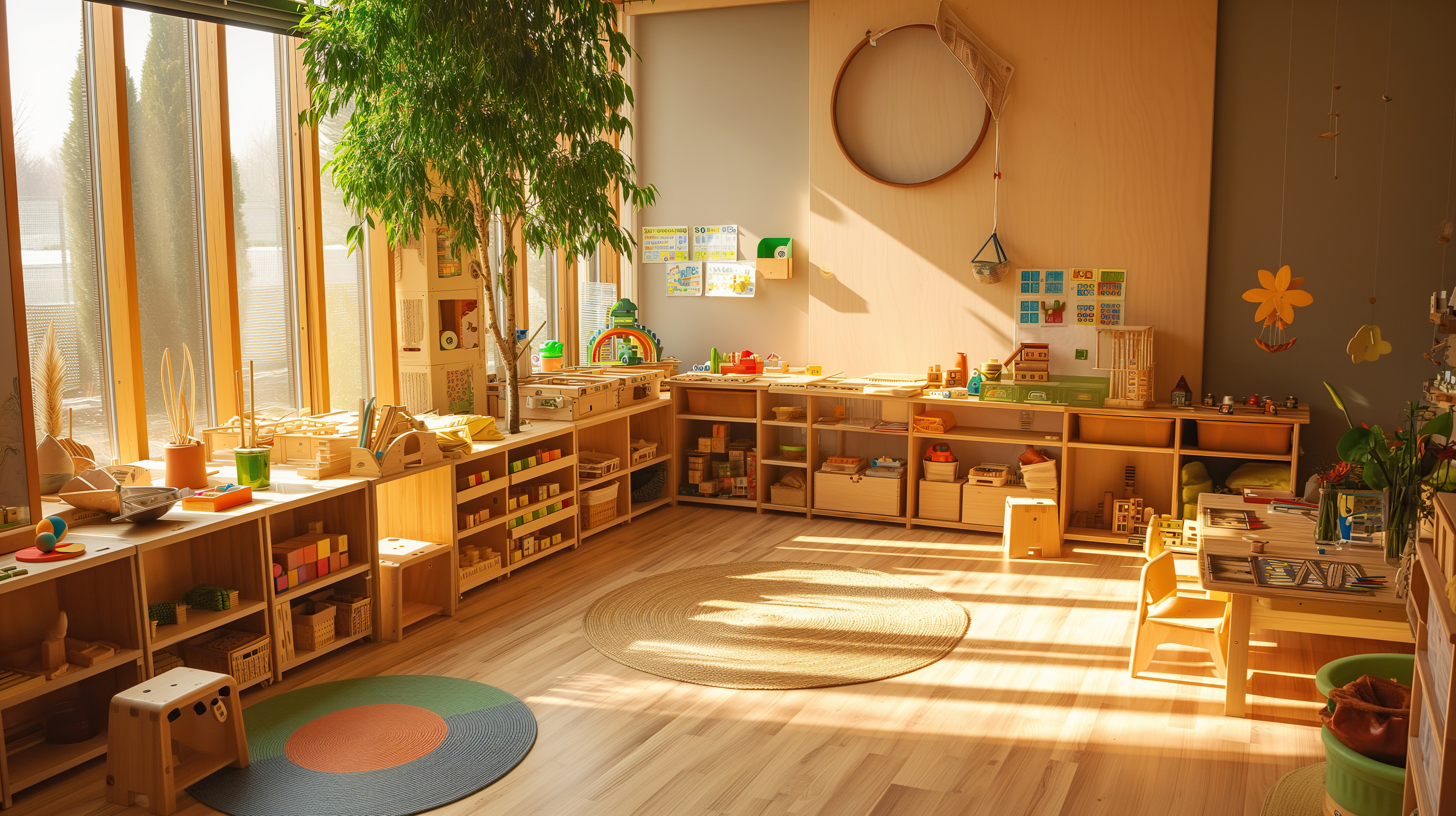
Through age-appropriate furniture, one of the main reasons an ideal layout in childcare facilities promotes both safety and development is achieved. Created expressly for the developmental stage of the children utilising it, furniture encourages independence and lowers risk of injury.
Low chairs and tables, for instance, allow toddlers to sit and stand safely unassisted; padded edges on furniture help to prevent bruises from play. Good design also arranges child-accessible learning tools, toys, and storage solutions so that kids will explore and participate without ascending or pushing. This promotes independence and decision-making ability in addition to safeguarding physical safety.
@bricksbegin A childcare centre design with love and blend with nature elements 🍃🏡 Photo: Bricksbegin Design: Senscius Arc Location: Kuala Lumpur #bricksbegin #kualalumpur #spacephotography #architecturalphotography #interiorphotography #interiordesign #videography #interiorvideography
By dividing activity areas according to age groups, further safety is improved; infants require soft, confined areas with few hard surfaces, whereas older preschoolers can benefit from more dynamic areas for movement and interactive play. Choosing non-toxic, robust, and simple-to-clean materials also guarantees that furniture not only resists daily use but also satisfies sanitary and health criteria.
Accident prevention also depends much on the deliberate positioning of furniture that is, avoiding crowding, keeping clear walking paths, and permitting sight. Teachers can oversee more efficiently; students can confidently negotiate their surroundings. A well-designed room including age-appropriate décor turns a safe, practical area that fosters physical growth, stimulates learning via safe exploration, and helps kids build confidence as they feel at ease in their surroundings.
Optimal Layout 5: Accessible Emergency Exits and Safety Stations
In an ideal layout in childcare centres, accessible emergency exits and well-placed safety stations should first priority since these elements are absolutely crucial to protect the well-being and safety of young children. Clearly marked and simple exits allow for a rapid and organised evacuation should there be an accident—fire, natural disaster, or other unexpected event.
The design ought to eliminate dead-end areas or tangled roads that may cause confusion or delays. Visible from key areas including classrooms, play zones, and common spaces, emergency exits should be sized suitably for staff and children to use effectively. Safety stations that have fire extinguishers, first-aid kits, and communication tools like intercoms or emergency phones are just as critical. These stations ought to be positioned at strategically significant locations reachable swiftly for adults but secured against child misdoing.
Incorporating these safety elements into the general design helps staff to react swiftly to events thereby reducing damage and preserving serenity. It also signals to parents and caregivers that the centre considers emergency readiness seriously. Practicing frequent evacuation drills within the intended design also helps youngsters get acquainted with the procedure, hence lowering panic and strengthening safety habits.
Operators build not only a safer environment but also one that promotes the emotional security and confidence of both children and staff by including accessible emergency exits and well-equipped safety stations into the construction of the childcare centre, therefore assisting significantly to their general growth and development.

Speak with The Experts
Planning to get started at your kindergarten but have no idea about it?
Childcare Center Renovation Singapore is a reliable company for renovation and interior design. They have about ten years of experience in this field and have a good reputation among customers.
Call us now to get your desired kindergarten design ideas now!